

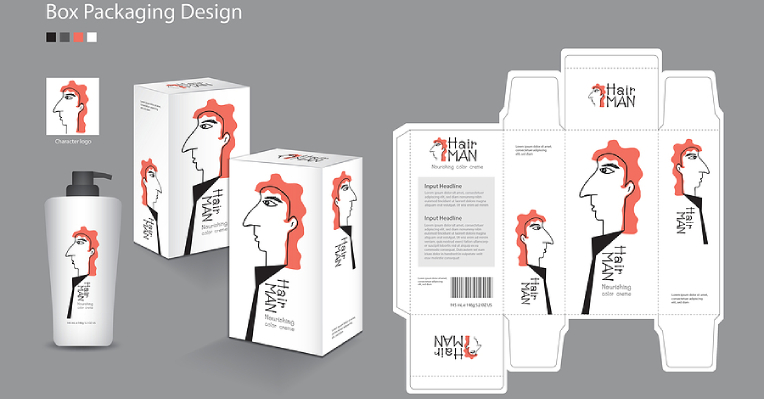
Packaging is not just about visual attractiveness and physical impact. It’s also about brand positioning and differentiation.
When your product is next to another on a shelf, you want to be able to connect with your customers by leveraging your brand’s personality. This is called a design strategy, and it is built upon clear brand objectives.
The following are helpful guidelines to follow, in order to craft an effective design strategy:
1. Brand differentiation
Your product packaging determines your brand’s shelf presence and retail differentiation. With the packaging, you must feature the unique attributes of your product and outline how different you are from the competition.
An example of a factor that goes under this is typography— how legible and readable is the print? If a customer has to actively read the label to determine what makes you different as a brand, it’s probably time to upgrade your packaging.
A uniquely shaped package can go a long way in setting your product apart in a market where one product can be very similar to another. Why not go down the road less travelled with canvas bags, drawstring pouches, or uniquely shaped box packaging?
The bottom line is that you should present your brand’s point-of-difference, and the easiest way to do that is to bump up your packaging design.
2. Customer appeal
Visual attractiveness and aesthetics factor under customer appeal. The operative word is “attention-grabbing”. How do you draw customers in and capture their attention? Some ways to do that with packaging are to focus on colour, physical structure or shape, printing styles, and typography.
It is easy to bump up brand differentiation and customer appeal with paper bags, custom tote bags, and nonwoven bags. They are excellent options to go wild with colours and print.
An aesthetically appealing package will strengthen the appeal and value of any product, thus boosting your brand.
3. Category appropriateness
Endeavour to develop a design that communicates the nature of your product. In developing distinctive packages, always strive to be category-appropriate.
Certain types of products go well with paper bags, canvas bags, or cotton bags, while other types of products don’t. Same thing with box packaging and drawstring bags. Category-appropriateness also goes into considerations like the size and shape of the package.
As a plus, strive to maintain uniformity with your brand’s family of products. In that way, your product lines will be more diversified and more recognisable for consumers, thus strengthening your brand.
4. Innovativeness and sustainability
Why not invest in smart packaging? The more unique your design, the more you can stand out. Some companies offer bags and packaging with proprietary features, such as reversible canvas bags.
Also, take sustainability into account. If the quality is good, everything from box packaging to plastic and PVC bags can be reusable. And, of course, packages such as canvas bags, drawstring bags, and nonwoven bags are decidedly eco-friendly and meant for long-term use.
In deciding on new materials and packaging design, you should strive to increase functionality and sustainability.
Conclusion
While many factors determine how successful your brand or product will be, these guidelines are good rules-of-thumb in helping to maximise the visibility and appeal of your brand to customers, undoubtedly helping you meet your marketing objectives.


